Showing posts with label consumers. Show all posts

Friday, February 25, 2011

NEWS REPORT / mybangalore

Masala Tee Boutique: Serving Sustainable Tees


Masala Tee, a brand that is inspired by tea, tee and India, not only uses organic cotton to manufacture its t shirts, but also supports the cause of empowering underpreviledged Indian women and children.

Founded by two tea lover friends, Sheikha Mattar-Jacob from Singapore and Indo-French Noelline Besson the brand name Masala Tee is a play on the quintessential Indian masala tea, says a news report in mybanglore. The former came to India because her huband got posted here and the latter came only to visit the country to discover her birth place. The whole idea of this business started over a cup of tea when they met.

“Over a cuppa masala chai, we concocted and brewed the Masala Tee concept. The tee-shirt concept was brewed, frothed, spiced, sweetened and sparkled in India for the world.  The word masala refers to our diverse background and at the same time it symbolizes something fun, quirky and totally Indian,” says Sheikha to mybanglore.

The brand offers vibrant tee-shirts with screen-printed faces of women, embellished with Swarovski crystals and is truly inspired by India. Each t shirt is packed in its individual tea bag.

Wearing a Masala tee is not just about being an upper class fashionista (prices start from Rs 2000), but also about making a conscious fashion choice. Last year, in a Masala Tee Humani-tee week, the company announced that each of its tee sold would subsidize one month of education of an underpriviledged child in India. A percentage of the sale proceeds go towards various NGOs that work for the underprivileged children and women.

Read More..

Wednesday, October 13, 2010

NEWS REPORT / EFW

Eco-Innovation Walks The Ramp At Vancouver
 Sustainable fashion seems to be running high on innovation as became evident at the Vancouver fashion show when designers showcased creative use of waste, eco shoes and sustainable harvesting practices in the Amazon forest.

The Vancouver Eco Fashion Week seeks to promote environmentally conscious trends in fashion. At the fashion week, loudest were the voices amplifying various aspects of sustainable fashion. WGSN’s Carly Stojsic explained how denim scraps can be used for housing insulation and made the point that the whole process of the life cycle needs to be considered when evaluating a product, reports eco fashion world.  Mark Trotzuk from Boardroom Eco Apparel echoed the point that sustainable textiles must look at all factors including raw material choice, impact of the process it was created by (water, energy), travel, after care, packaging, print paper usage, disposal, etc.

The discussions around the fashion week made a couple of telling points. Speakers such as Paul Raybin made the point that public commitments by large brands towards sustainability imposes a pressure on them to follow up while at the same time creating a precedent for other people and brands to follow. On the other hand, speakers such as Trotzuk highlighted the difference between the entire lifecycle of polyester (ideally recycled) and organic cotton discussing how in beginning stages cotton appears better, but in later stages the poly shows to be more sustainable as the fabric last longer and the garment care does not require hot water, dryer, or iron.

Read the full Story: Success For Eco Fashion Week Vancouver
Read More..

Monday, September 20, 2010

PRESS RELEASE / LAKME FASHION WEEK 2010

Back to Nature Walks The Ramp in Lakme Fashion Week

The Lakme Fashion Week in India has a strong showing by designers building their stories around the organic, sustainable and back to nature themes.

Anita Dongre’s collection at the Lakmé Fashion Week Winter/Festive 2010 show was called “A Tale of Two Cities” but it was also a tale of two collections from the very creative designer.

Inspired by the Rajasthan village woman, her prêt IINTERPRET line was aimed at the jet setting woman, who loves to blend the styles of the east and west. Using some eco friendly fabrics like Liva‐Viscose by Birla Cellulose, Anita had a versatile wardrobe for the woman on the go.

In the Anita Dongre ‐ TIMELESS line with touches of Jaipur, there were the Indian textiles and weaves which made a dramatic impression on the ramp. Using organic cotton, vegetable dyes and hand block prints, the look was regal and opulent for bridal wear with silver zardozi work, mukaish and gotta craft which were used lavishly for the ghagras, churidars and beautiful saris.
Read More..

Tuesday, September 14, 2010

NEWS REPORT / THE ECONOMIC TIMES

Apparel Brands Take An Eco Turn In India

Major apparel brands in India are taking a eco-turn with environment friendly textile lines now being seen as an essential part of the line up. Retail brands are acknowledging a small but significant consumer demand which is not only willing to pay the premium, but is also making a conscious choice for sustainable garments.

A report in the leading Indian business daily Economic Times says "Organic clothing is a revolution towards a better living. Less of a commodity and more of an idea or a concept, Indian garment companies are pitching in with their efforts to promote the concept."

According to the Economic Times report, being eco-friendly has acquired a business sense in retail. With apparel retailers including Wills Lifestyle, Van Heusen, Benetton, S Kumar’s Nationwide (SKNL) and Arrow betting big on eco-friendly line of apparel to woo the environment-conscious consumers, the segment is set to get a leg up in times to come.

The report says that while currently this segment accounts for less than 1% of the Rs 32,000-crore organised branded apparel market, it has a potential to grow to about 5% of the total market in the next five years, say industry players.

Van Heusen, the apparel brand from Madura Garments, which launched its green range of apparel in April this year, has seen a healthy demand in the market for organic clothing. Wary of how the market will receive such a line, the brand started with a limited edition, but soon saw it flying off the shelves.

Jeans maker Levi’s, which already retails organic jeans in the US market, is set to launch its organic line for male and female denims —Levis- Eco—in India. While the cotton used by the company for making jeans is organic, the button on the waistband is made of coconut shell. There are no metal rivets, the dye is from natural compounds include indigo, and the label is from recycled cardboard.

However, the report cautions that the segment is still at a nascent stage as it is yet to penetrate the mass segment due to pricing difference. According to retailers, a piece of clothing in the eco-friendly segment is priced at about 30% higher than the usual apparel. While developing an eco-friendly range of apparel increases the cost to the company, limited suppliers producing clothing out of natural ingredients or recycled material also pose an additional challenge for the retailers. As a result, the production of apparel has not exceeded about 100,000 pieces a month. Despite these limitations, brands are bullish on the prospects of eco-garments.

Read the full report in The Economic Times: Demand for eco-friendly apparel grows
Read More..

Friday, September 10, 2010

COMPANY REPORT / PEOPLE TREE

A Journey to Bangladesh

Emma Watson's recent trip to Bangladesh with People Tree has brought closer to the people to whose lives Fair Trade makes a difference. Writing on the People Tree website, Emma says "I still find it hard to convey what Fair Trade means to those producing our fashion - it's just so impressive to see how the women have used Fair Trade clothing to escape poverty and empower themselves and their children. I was very moved and inspired."

Endorsing the new collection of People Tree, she writes, " Although I wasn't centrally involved in the design of this collection, I had great fun in helping Safia select some gorgeous Fair Trade textiles - a dogtooth hand woven check, cable knits, soft organic jerseys and the first Fair Trade hand woven brushed checked fabric which has been made into easy tulip skirts, dresses and shirts."

"There are even a few party dresses, such as the little black satin tulip dress which can be dressed up or down to suit any occasion! I have picked out some of my favourite pieces which I have modelled for People Tree."

In an interview with Safia Minney of People Tree, Emma goes on to say, "Having seen the slums in Dhaka and the conditions in which these people live and work to produce 'fast fashion', I would say to those people that this is not the way we should be making clothes in the modern world.

These workers have no rights and work every hour of the day just to feed their families. Fair Trade gives families the option to stay together, rather than one or both parents having to move to cities, and they are paid a fair wage. It empowers people and doesn't take away their dignity."

Read Emma Watson's Message and Interview at People Tree

Photo Courtesy: People Tree
Read More..

Wednesday, September 8, 2010

INTERVIEW / TRAIDCRAFT COUNTRY DIRECTOR NEETI MALHOTRA

Fighting Poverty Through Trade

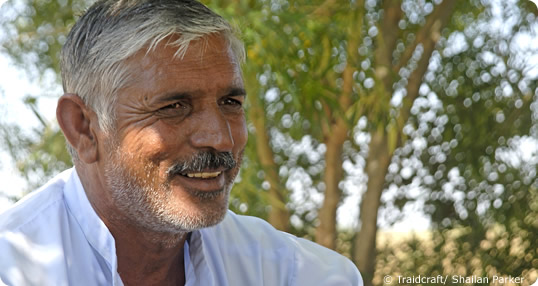
Traidcraft, a UK-based fair trade organization, established in 1979  fights poverty through trade, helping people in developing countries to transform their lives. In India, Traidcraft works to create demonstration models with farmers and engages in advocacy of issues that adversely impact small farmers.

Traidcraft earlier this year helped launch the fair trade label ‘Shop for Change’ in India, with a focus on cotton as the lead protect. According to Country Director for Traidcraft Exchange's India Country Programme, Neeti Malhotra, at the trade and support levels, the positive impact of Traidcraft’s work has been through the collectivization of small farmers, giving them an identity and thereby increasing their power of negotiation in the market, accessing business services, and achieving economies of scale.

At the influence level, she believes collective operations have enabled farmers to feel empowered to advocate and lobby for their issues and effect policy change. 

In an interview with Make Cotton Sustainable, Neeti Malhotra says “Farmers now realize their own importance in supply chains and are also able to raise their voices on several policy issues.”

Why are Cotton farmers important to Traidcraft?

Traidcraft specializes in equipping the poor with business and enterprise skills, and lobbying and advocacy skills that enable them to improve their lives. We have over 25 years expertise in South Asia based upon tried and tested practical interventions.

Cotton farmers are important to Traidcraft because of the sheer size of the sector worldwide and the very large number of small and poor farmers who grow cotton in agriculturally difficult regions of the world – i.e. arid and semi arid.  In two of the countries that Traidcraft works in – Kenya and India, cotton is one of the major crops and millions of farmers are dependent on it.

Over 15 million Indian farmers and their families rely on cotton for their livelihoods. However small cotton farmers are disorganised and unable to wield any political power.

Most Indian agricultural policies that relate to the cotton sector (such as the Minimum Support Price, procurement, marketing, credit, input support etc.), do not favour small farmers. For example, chemical fertilisers are very expensive. Subsidies are paid to the companies and are not passed to the farmers.  In addition, these huge subsidies have encouraged the indiscriminate use of chemical fertilisers, which has resulted in the degradation of natural resources, especially soil, and is now threatening the food security of the country.

Small cotton farmers also face a number of other problems which make it hard for them to earn a sustainable livelihood: they face ever-increasing costs which are pushing many into debt; they are too poor to invest in new technology; they face low productivity and yields due to poor soil quality and poor quality seeds; they suffer from poor health and nutrition which reduces the time they can spend earning income; they face expensive and exploitative local credit and inputs (such as pesticides and seeds); and they lack any sort of safety net. Erratic weather patterns in the shape of unprecedented droughts or flash floods due to climate change have increased their vulnerability even more. In the face of so many problems an estimated 200,000 farmers, many of them cotton farmers, have committed suicide in India since 2003 - and this trend shows no sign of stopping. (On average there has been one farmer suicide every 32 minutes since 2003.) Small cotton farmers need practical interventions to help them develop more sustainable cultivation.


Who are your partners in India?

In the cotton sector, Traidcraft has been working with Agrocel for over a decade now.  Our other partners in the cotton sector include, Shop for Change (Mumbai) SEVA (in Raichur) and the Nav Nirman Trust (in Raichur).  Through a Cotton Forum that we have recently initiated, we are networking with other NGOs including Chethna Organic, Chethana Society, Zameen Organic, Centre for Sustainable Agriculture, Oxfam, Organic Exchange, among others.  

What is your vision for Traidcraft as an organisation?

Traidcraft’s India office is a liaison office working as the representative of its main office in the UK.  Given our limited role and the size of our operations, Traidcraft sees itself playing the role of a catalyst to bring together like-minded organizations on a common platform and facilitate their working together with each others’ strengths towards a common mission of reducing poverty. 

What geographies are you working in on Cotton in India?

At present, the India Cotton project developed by Traidcraft UK is being implemented by project partners (local Indian NGOs) in the Raichur district of Karnataka.  This project is funded by UK’s Department for International Development (DFID). Along with partners, we do demonstrative projects but through platforms like the Cotton Forum, we are covering a larger geographic area by influencing action and policy level work. Our future plans on cotton are geared around the main cotton growing regions in the country particularly central and southern India.

What are the positive impacts you have created and how do you measure them?

Traidcraft works at three levels – trading (access to markets), support (technical and business services training & consultancy), and influence (policy change).

At the trade and support levels, the positive impact of Traidcraft’s work has been through the collectivization of small farmers, giving them an identity and thereby increasing their power of negotiation in the market, accessing business services, and achieving economies of scale.  Where there is a choice of fairtrade markets and fairtrade certification, farmers are able to get a fairtrade premium for their crop which has benefitted their community.  Through provision of appropriate services and related training, the costs of production has  reduced due to better and environment friendly agricultural practices.  This is measured against the baseline data collected in each ‘project’.

At the influence level, collective operations have also enabled farmers to feel empowered to advocate and lobby for addressing their issues and effect policy change.  Farmers now realize their own importance in supply chains and are also able to raise their voices on several policy issues.

In January this year, Traidcraft helped launch a fair trade label ‘Shop for Change’ in India with a focus on cotton as the lead product.  This has and will bring in a number of private sector organisations to join the movement to create fair trade supply chains in India.  We have also begun to build a consumer movement around fair trade to strengthen the demand side of these supply chains.

This is supported by advocacy at the international levels, interactions with UK companies (through the Ethical Trading Initiative and Fairtrade Foundation), and sharing learning across the regions where we work.


What role do you think the private sector players e.g retailers can play to catalyse this effort?

Private sector players along all parts of the cotton supply chain are critical to sustainable change through their good practices and ensuring that they keep development at the heart of their business operations. 
Traidcraft plc which is a leading fair trade organisation in the UK does this by example.  Therefore, working with private sector companies e.g. seed companies and retailers can play a very important role in ensuring the interests of small cotton farmers are taken care of. 

If, for instance, retailers agree to promote products made of certified (whether organic or fairtrade) cotton and educate consumers regarding the benefits of these products to the farmers, farmers can be assured of better prices, assured markets and cultivation practices that are not harmful to their health and that of their families.  Similarily, if seed companies commit themselves to a ban on the use of child labour in seed production, a very unfair practice would stop.  Seed companies (as their social responsibility) could support this through better wages to the farmer families (so that they are not tempted or forced to send their children for work) and ensuring educational opportunities for the children of the farmers working for them.

Photo Courtesy: Traidcraft
Read More..

Monday, September 6, 2010

NEWS REPORT / BUSINESS STANDARD

Alok Industries, Victoria's Secret And Burkina Faso

There is another Victoria's Secret: The Indian connection to the global rage tied in with cotton sources from Burkina Faso, says a report in the Business Standard. The story begins a little while back.

According to an earlier West Africa Cotton Improvement Program (WACIP) report, in July 2007, the National Union of Burkinabe Cotton Producers (UNPCB) signed an agreement with Limited Brands on behalf of Victoria's Secret to purchase 600 MT of organic “fair trade” cotton, the bulk of Burkina Faso's organic cotton crop. Under the contract, UNPCB had to assure proper handling so the cotton could be certified as organic. To support this innovative deal, WACIP contributed funds to help UNPCB purchase locally-fabricated cotton sacks and wrapping materials as well as training of farmers.

Now, says the Business Standard, Alok Industries' has had a three year sourcing arrangement from Burkina Faso and is now taking its machines to the West African Country.

According to the Business Standard, Alok Industries’ involvement with Victoria’s Secret and Burkina Faso is actually three years old. Since 2007, Alok Industries along with its Sri Lankan partner, MAS Intimates, sources close to 300 tonnes of Burkinabe cotton from there. This cotton gets shipped to India and Alok Industries spins 200 tonnes of yarn from that. This yarn is then made into fabric and sent to MAS Intimates factories for the final garment before it hits high street fashion shelves from New York and Paris to London and Tokyo.

But now, in order to make the economics even more viable and to kickstart industrialisation in the former French colony, Alok Industries is planning to set up a manufacturing base - a spinning unit of 68,000 spindles.

Currently, Alok Industries sources 3,500 tonnes of yarn from outside to fulfill its own clothing requirement. A facility in Burkina Faso will now give it an option to make 600 tonnes of yarn every month. That’s 7,200 tonnes every year which the company can use for its own requirement or sell to other textile companies.

Alok Industries exports 35 per cent of its products to over 70 countries in the US, Europe, South America and Africa. Other than Victoria’s Secret, its global customers include GAP, JC Penney, Mothercare and Walmart. Alok Industries’ export income in 2010 has seen 60 per cent annual growth at Rs 1560 crore.

Read here the full report on "Alok Industries spins Victoria's Secret in Burkina Faso" in the Business Standard

Photo Courtesy: WACIP and Victoria's Secret
Read More..

Tuesday, August 24, 2010

NEWS REPORT / NIKKEI

Itochu To Support Farmers' Transition to
Organic Cotton in India

Japanese trading house Itochu Corporation will seek to boost the output of organically grown cotton in India by providing financial aid to small farmers who give up the use of chemicals, reports Nikkei.

Accreditation for organic cotton production requires at least three years of chemical-free cultivation, with small producers facing dwindling income for that period. As a result, the trading house will pay a premium of 20-30% over regular cotton during the course of the transition.

Cotton grown during the changeover will be branded pre-organic. Last year, Itochu bought 400 tons of pre-organic cotton from some 900 farmers in northern India, and plans to buy 500 tons from 1,100 producers this year. With around 4,000 farmers wanting to make the switch to organic, Itochu plans to procure 1,000 tons from 2,000 producers in 2012.

Purchased pre-organic cotton will be shipped to Japan and elsewhere in raw cotton or thread form to be made into T-shirts, jeans and other products. Focusing on their eco-friendliness, the items will be marketed as high-value-added apparel to differentiate them from lower-priced offerings.

Source News Report: Itochu Promoting Organic Cotton Production In India
Photo Courtesy Itochu Corporation website
Read More..
NEWS FEATURE / ADWEEK

An Organic Expansion

Is Organic Cotton finally going mainstream. Is it moving out of the fringes of nice things to do and taking centre-stage as the way of fashion? A key to such mass shifts in consumer fashion behaviour is seen only when new trends extend beyond the clothes horses and move on to a more 'universal' set of textiles and apparels, linen and upholstery. And that's what seems to be happening for organic cotton.

An Adweek feature on Greensource, the eighth largest maker of organic clothing on the planet, with revenues in excess of $50 million, chronicles the story that began six years ago with a shipment of yoga tops to to Sam's Club, Walmart's warehouse club unit.

David Basson, the CEO of Seattle-based Greensource Organic Clothing Company, makes the point that with huge retailers finally catching on, it's only a matter of time before organic clothing goes mainstream. "Consumers understand the issues," he says. "They want to take care of the planet. Once people get into it, they're not going to go back."

Adweek points out that the numbers are out there to support Basson's prophesy:

Not long ago, the mere mention of organic apparel conjured images of Woodstock-era hippies clad in hemp belts and Birkenstocks, mashing up a fresh batch of granola. But such clichés -- if they were ever accurate -- are far from the reality now.

Between 2008 and last year, while recessionary cutbacks in household spending saw overall sales of apparel and domestic textiles drop by 7 percent, sales of organic cotton grew by double digits -- 35 percent to be exact -- according to the trade group Organic Exchange. In fact, organic cotton's annual growth rate has grown steadily for a decade now: 40 percent on average each year since 2001. Organic apparel is currently a business worth $4.3 billion; by next year, it's expected to hit $6 billion.

Read "Moral Fabric: Clothiers Go Organic" in the Adweek
Read More..

Monday, August 23, 2010

PRESS RELEASE / BIOFACH 2011

BioFach 2011 To Celebrate Organic Cotton


Green fashion is on the road to success and global representatives from the organic sector meet once a year at BioFach, the World Organic Trade Fair at the exhibition centre in Nürnberg. Altogether 2,557 exhibitors and 43,669 trade visitors attended the last event.


From 16–19 February, the Textil-Area at BioFach 2011 will have a gathering of suppliers and visitors with interests in natural textiles and eco fashion. This year’s special area continued the success of the premiere with a total of 47 exhibitors present. A real highlight this year were the daily fashion shows, which will take place again in 2011 following their successful first edition, says a BioFach 2011 Press Release.

Buyers will be able to view new products and trends from the green fashion market at the BioFach and Vivaness exhbitions in Nürnberg from 16–19 February 2011. In addition, the Textile Forum sessions will be held simultaneous with the annual BioFach Congress.

 Press Release: BioFach 2011: Green fashion increasingly catching on
Read More..

Thursday, August 19, 2010

PRESS RELEASE / VAN HEUSEN

Van Heusen Organic Shirts Fund Tree Drive

In India, Van Heusen had introduced an ECO Range in April this year – a 100% organic line of shirts made of 100% organic cotton, untreated cotton seeds and natural dyes.  As part of this initiative, Van Heusen had committed to give 1% of its sales of the Eco line to “Trees for Free’’ an organization committed to increasing the green cover on this planet. In essence, every eco shirt purchased meant more trees planted.

The sole aim of ‘Trees For Free’ organization is to plant and nurture trees in public spaces for the benefit of all. Till date, they have planted over 21,000 saplings in the city of Bangalore.

Living up to the commitment, Mr. Shital Mehta, COO, Van Heusen today presented a cheque of Rs 4.5 lakh, a part of the revenues from the sale of Eco line, to Ms. Janet Yegneswaran, President of ‘Trees for Free’ at the company’s head office in Bangalore, says a Press Release.


For the full Press Release
Read More..

Saturday, August 14, 2010

NEWS REPORT / THE NEW INDIAN EXPRESS

The Ethicus of Organic Fashion

There is a new breed in town in India: The organic entrepreneur. People who have looked at their business with fresh eyes and tied it back to the millennia of tradition of caring for the earth, the soil aand the rooted Indian approach of balance between nature's elements. One such story being told in the Indian Express by
Vijayalakshmi Nachiar of Ethicus who is promoting her ‘ethical fashion’ brand from Appachi Cotton. Vijayalakshmi ties up her story with the fate of the weaver community and India’s handloom industry.

According to the Indian Express, the Ethicus story began in the sleepy town of Pollachi, Tamil Nadu, where a young and self-motivated couple, Mani Chinnaswamy and his wife Vijayalakshmi, the former with a graduate degree in management from the US and the latter with a graduate degree in textiles from Mumbai, inherited a three-generation old cotton business that was steeped in tradition, Appachi Cotton.

They worked on the concept of ‘inclusive and sustainable growth’ and adopted an innovative integrated contract farming model for cotton which helped ensure income for thousands of marginal farmers in the cotton production supply chain.

Mani started organic farming in the Kabini region in Mysore, which is an eco-sensitive area, involving 185 farmers which is now a certified organic farm. “To grow organic cotton in the region is ecologically viable as the Pollachi-Kabini region is home to a wealth of flora and fauna, including a tiger reserve and an elephant sanctuary that are under dire threat from synthetic genetically modified cotton cultivation which is contaminating the fragile forest reserves with its heavy use of chemicals,” says Vijayalakshmi.

The couple says there is a social stigma associated with farming. And traditional crafts like weaving are looked down upon. So the weaver community does not want their children to take up weaving but go for IT-related jobs. But Mani is encouraging these communities by ensuring that all players in the value chain, be it the environment and local wildlife, the farmers, the weavers, the centuries-old traditions, future generations and ultimately the very nation are taken forward to a better life.

Read the story here in The Indian Express
Photograph: www.ethicus.in
Read More..

Saturday, August 7, 2010

NEWS REPORT / SUNDAY MID-DAY

India's Online Organic Store

Do U Speak Green is India’s first 100 per cent organic clothing webstore and markets apparels made from organic cotton, bamboo, even eucalyptus viscose. “I am a wildlife and nature enthusiast, and have been in the business of exporting natural fabrics. The time seemed right ripe for an organic clothing line for India, since there was nothing like it here,” says the Mumbai-based entrepreneur Shirish Goenka in a report in the Sunday Midday.

“Most cotton farmers in the country don’t possess protection that’s necessary when dealing with pesticides. Most of them suffer from related illnesses, and some of them succumb due to prolonged exposure. Buying organically grown cotton means you are doing them a favour.” Organic cotton grown without chemicals is also better for the soil since soil fertility and therefore, yield, increases progressively over the years. As part of their commitment to the environment, Do U Speak Green donates 10 per cent of profits to the Bombay Natural History Society (BNHS), which uses the funds for conservation and plantation projects. The brand also retails at the BNHS office.

Read the Midday Story "Walk & Wear the Green Talk"
Read More..

Thursday, August 5, 2010


India's Green Entrepreneurs

Across the world, India's 'green entrepreneurs' are building on the country's large organic and sustainable cotton-growing base to build enterprises both at home and abroad.

In Freemont, California, the Green Creation founder Smitha Prasad knew the demand for organic baby clothing first hand, having searched for affordable products to the point of frustration for her two young children.

According to the IndUS Business Journal, Prasad launched The Green Creation in March. The Fremont, Calif.-based company designs and manufactures organic cotton clothing products. Currently its focus is on baby clothing: bodysuits and pants for infants and T-shirts and pants for toddlers. The company also sells baby accessories such as wash cloths, bibs, towels and blankets. The Green Creation is trying to keep prices as low as possible with all clothing items set at $13.99 and accessories ranging from $4.99 for wash cloths to $29.99 for blankets, currently the company’s most expensive item.

The clothes are manufactured in India in two factories, one in Kolkata and on in Tamil Nadu. The clothes are shipped out of a distribution facility in Fremont.

A similar inspiration lay behind Sameer Joshi's starting of the Funkoos Organic Baby Apparel line. When he started looking for organic clothing for his own newborns in 2008, he came away disappointed with the consistent combination of high prices and low quality they found. He and his co-founders got entrpereneurial and started Funkoos Organic Baby Apparel in order to give new parents the choice of high quality, affordable organic clothes for their young children.

Funkoos has local representatives in India where its products are manufactured and the quality control products on the assembly lines during manufacturing helps keep quality high and lower prices by reducing the risk of rejection during the final inspection phase, says Sameer Joshi in an interview to greenbuildingpro.

In India, entrepreneurs are going back to India's Khadi roots to propagate sustainable cotton. MINC fashion store in Bangalore is promoting eco-friendly fashion by using organic cotton, vegetable-dyed fabrics, and khadi.

Mini Shibu, a post graduate in apparel design from NID, and her husband Cdr (Rtd) Kochery C Shibu launched MINC, an eco-friendly fashion store for women. The concept “was to promote eco-friendly fashion, working with khadi fabrics, organic cotton and vegetable-dyed fabrics, while supporting a social chain of tribal cotton farmers, weavers and dyers community, therefore, trying to facilitate a healthier environment” , says the DNA.


The store offers MINC toujours and MINC petite for young girls and tweens, which are the labels from the studio Mishan designs in Bangalore.

The sustainable cotton story is not limited to retail chains. Cotton yarn manufacturing companies in India are also finding strong market support for sustainable cotton.  Cheslind Textiles Ltd., a maker of cotton yarn that supplies to brands including Victoria’s Secret and Calvin Klein, has increased production of organic cotton yarn by 33 percent to meet rising demand from Wal-Mart Stores Inc. and lingerie retailer Victoria’s Secret, reports Bloomberg

Read More..

Wednesday, August 4, 2010

PRESS RELEASE / ORGANIC EXCHANGE 

Organic Exchange to Host Sustainable Textiles Conference

Over 300 international representatives will meet in New York City, New York USA October 27-28, 2010, to attend the 2010 Organic Exchange Sustainable Textiles Conference (www.organicexchange.org), according to a Organic Exchange press release. Participants will include those involved in making key decisions on sustainable textiles including; brands and retailers, manufacturers, farmers and producers, academics, NGO’s, and certifiers.

Attendees will learn about and discuss best practices, emerging issues, and strategies to improve sustainability of textiles, and organic cotton. An exhibit area will demonstrate and profile the best of sustainable fibers and technologies. Organic Exchange will host a separate one-day seminar focused on organic cotton on Friday, October 29.

The 2010 annual conference will also see introduction of the new OE (complete with a new name and logo) which will to help navigate through the shifts in the textile marketplace with an array of services and products.

Yvon Chouinard, Chairman and Founder of Patagonia, will provide insight on transparency during his keynote address. Other plenary speakers include: Eileen Fisher, designer and owner of fashion leader Eileen Fisher, Inc., and Tensie Whelan, President of Rainforest Alliance. Workshop speakers include leading experts in environmental footprinting of textiles, water conservation and management in the textile chain, eco indexing, environmental issues in dyeing and finishing, natural textiles, recycled textiles, bio-based textiles, ensuring product integrity claims, understanding the regulatory landscape, and more.

The conference is sponsored by Anvil Knitwear, ICCO, Lenzing, Nike, Orta Anadolu, Pratibha Syntex, Patagonia, Egedeniz Tekstil A.S., Eileen Fisher, Esquel, Genencor, Greensource, Hemp Fortex, Huntsman, Nordstrom, PT Indorama, Texas Organic Cotton Marketing Cooperative, Disney Consumer Products, and EcoTextile News.
Read More..

Thursday, July 29, 2010

NEWS REPORT / TIMES OF INDIA

Indian Apparel Going Sustainable
Sustainable cotton is creating space in India, a market that has been relatively innocent on issues of sustainability despite being the leading producer of organic cotton. From large brands such as Arrow and Van Heusen to new brands on the rack including Chennai based Appachi Cotton with its Ethicus brand, organic and sustainable cotton as well as ethical fabric is here as retailers increasingly appreciate the inherent value of better practices in agriculture and the farm to fashion value chain.

Reports the Times of India,  that while sustainable cotton has started making its presence felt, a combination of price and certification stay as barriers to a proliferation of sustainable cotton apparel. Among those putting sustainable cotton and ethical trading on the India map are people like Mani Chinnaswamy, Managing  partner of Appachi Cotton, who owns the Ethicus brand. "We grow organic cotton and do the ginning and weaving
following eco-friendly practices," Mani Chinnaswamy told Times of India. Labourers and weavers are paid fair wages and their children educated for free in schools in Zamin Uthukuli village, Pollachi, in western Tamil Nadu.
Van Heusen's line is an acknowledgement of consumer preferences. "In the last few years, people have become more conscious about going green. We've always procured from suppliers with fair trade certification. We were giving out recyclable bags but decided to go a step further and create a 'green' shirt," says Shital Mehta, COO of Van Heusen, a brand from Aditya Birla Group's Madura Garments.

Suresh J, CEO of Arvind (brands and retail), which has brands like Arrow and Flying Machine under its umbrella, told the Times of India that most of their factories have been approved by the international organisation Business Social Compliance Initiative. This means the company spends at least 10 per cent to 15 per cent more on its back-end.

Indian manufacturers see going green as an inevitable choice. "The customer is open to the idea of spending a little more to make a responsible choice," says Chinnaswamy. "For a person in a city, a simple way to help the environment is to choose a product that's produced responsibly."

Read the full Times of India story Slip into a shirt, save the earth
Read More..

Wednesday, July 28, 2010

Malkha: The Freedom Fabric

Malkha, a pure cotton cloth made directly from raw cotton, is getting itself heard. And admired. Malkha cotton production has its roots in initiatives that followed droughts and consequent impoverishment and trail of suicide deaths of farmers in Andhra Pradesh in the late 1990s and into the middle of the past decade. Indebted farmers and weavers were left burdened with degraded and poisoned land loaded with pesticides while moncropping had resulted in an empty food basket. A combination of agencies and the Malkha Marketing Trust took on the task of preserving traditional techniques and indigenous cotton seed varieties.

Malkha is pure cotton cloth made directly from raw cotton in the village close to cotton fields and combines traditional Indian principles of cloth making with modern small-scale technology. Malkha is energy efficient, avoids baling and unbaling of cotton by heavy machinery and unnecessary transport. The lack of heavy and intense industrial processing results in Malkha having a beautiful texture, is soft, and keeps its shape for ages

The name Malkha was made up by combining the first syllables of mulmul and khadi. As Malkha production migrates to other states, the variants have started taking on new names. For example the malkha made at Magan Sangrahalaya, Wardha, wants to call itself  Magan Malkha. Malkha, in a sense, continues in the rich tradition of Indian cotton textiles which in their heydays had many different varieties of cotton fabrics. The names were many and varied, and part of the common vocabulary: bafta, nainsukh, dosuti, moree, jamdani, mulmul, chint [morphed into chintz], mashru, himru and many more

According to the Malkha Marketing Trust, Malkha fabrics are woven by skilled weaver families on handlooms in Indian villages from cotton grown by smallholder farmer families. The malkha process puts the intermediate stage of cotton spinning back in the village, making the entire textile chain from cotton to cloth village-based. The newly designed machines put sophisticated modern technology at the service of the village, on a human scale. They handle the delicate cotton fibres gently, avoiding the force and violence of conventional processing, keeping the springiness of the live fibres all the way into the cloth. That’s what gives malkha fabric its swing and drape. Malkha fabric is soft, it breathes, absorbs, holds colour, reflects its handmade heritage in its texture.

Malkha has become more than a mere quality of cotton fabric. It is fundamentally rooted in scaling up sustainable, ecologically friendly formats of processing cotton and yarn and seeks the ultimate goal of linking producers directly to buyers.

Today there are six units producing malkha cotton, styled as the freedom fabric, spread across the four states of Andhra Pradesh (Chirala, Khammam & Karimnaga), Karnataka (Bellary), Maharashtra (Wardha) and Kerala (Balrampuram). The Balarampuram unit is, incidentally, entirely run by women.

According to its blog,  the original malkha production unit was registered in late 2008 as a micro enterprise, the Kranti Nulu Vastrautpathi Vikraya Kendram which translates roughly as Revolutionary Yarn And Fabric Production And Sale Centre. It leveraged the local handloom culture of Chirala, using the existing skills of sizing, warping and of course the actual weaving. KNVVK is managed by the six machine operators [one more has been recently inducted] who buy the lint, turn it into yarn, send the yarn to the dye-houses, get the dyed yarn wound and sized into warps, and distribute warps and weft yarn to weavers. Weavers deliver the fabric to KNVVK who send it to Malkha Marketing Trust each month. KNVVK also handles all its own financial dealings, accounting and documentation, in fact all the business aspects of the enterprise.

Malkha, says its chief articulator, Uzramma, is ready to take on the world. “We are going to rule the world of cotton textiles. The way we make Malkha is energy-saving, eco-sensitive, socially responsible, and produces good clothes. What more do you need? We are going to change the world,” she says in a recent article by writer-journalist Shoba Narayan.

Says Uzramma writing in the Malkha blog, "The goal of the malkha initiative is to put all aspects of production, including management, in the hands of the producers, the people who do the actual work. In other words, to achieve true democracy in production. Unlike the corporate model, where almost the entire cadre of top executives is drawn from the elite sectors of society, the malkha model can be run and managed by people who do not have access to expensive education, or who do not come from a privileged or business background."


But the challenge for sustaining Malkha on a larger scale is quite apparent in Uzramma's writings in the Malkha blog. "Malkha has had an easy ride in the market till now, but there are bound to be shoals and quicksands in trying to match rural production, and that too by people unused to manufacture, to sophisticated urban markets that need on-time, quality goods. To add to our problems our own organization the Malkha Marketing Trust is seriously understaffed, and still in the learning stage."

"While urban customers have to juggle their deadlines and margins, rural malkha suppliers have to cope with transport strikes, the vagaries of the indigo vat, unexpected glitches in the newly minted pre-spinning machinery and the effects of 'development': The Dastkar Andhra master dyer tells us that pomegranate skin now comes from hybrid varieties which give a paler yellow than the desi. Unlike mass-production systems, malkha deals with people working independently at each stage: cotton farmers, yarn makers, weavers and dyers, all living and working in their own cycles that include seasonal variations - handweaving and natural dyeing are both affected by heat and humidity," she says.

She also points out that the greatest disadvantage which KNVVK and all the other Malkha production centres face is the lack of reliable electrical power. Not only are there long stretches of the day with no power, but there is no time-table for the power cuts, so that it is impossible to plan production.

"It's a long way to our ultimate goal of linking producers directly to buyers, and the first step is to get to know each other better," Uzramma writes.

Malkha has received financial support from the Andhra Pradesh Government's Society for Elimination of Rural Poverty (SERP) for Mini Spinning Units in Punukula, Paloncha Mandal of Khammam District, Chirala of Prakasam district and Sircilla of Karimnagar district. The Society for Elimination of Rural Poverty (SERP) is an autonomous society of the Department of Rural Development, Government of Andhra Pradesh.

The Decentralized Cotton Yarn Trust (DCYT) worked in collaboration with Vortex Engineering, Chennai, which has developed the “Micro Spinning” the technology and fabricated the micro-spinning machinery. Apart from creating rural employment, it is providing a profitable marketing outlet for cotton farmers of the area. SERP believes that scaling up of this project will create sustainable livelihoods in different production centers located in rural areas.

However, the challenge of converting a business to scale remains, given that there isn't enough financial support Writing in the Malkha blog, Uzramma points out, "Now here is the problem: Any business venture involving new technology needs a long period of support before it becomes self-supporting. In the conventional business world, this support is provided by venture capitalists, who look for eventual financial returns on their investments. But what Malkha needs is social investment, from investors who look for social rather than financial returns, who are prepared to invest their money in developing a just and equitable society...and that is what the malkha enterprise is searching for. The Gramaspinner technology is at the take-off stage: Only those familiar with the spinning process can appreciate the magnitude of the achievement. Now Malkha is waiting for a social investor who will see its potential and share its vision."

A portion of Malkha fabric is exported to Italy, France, Norway, the UK and the US, says Shoba Narayan, in her article in the Mint "Weaving a revolution, one piece at a time".

A French buyer for Hermès says in a letter posted on the blog," As a designer, I have been very attracted by the texture and aspect of the Malkha textiles, as well as the natural colors that you managed to blend in a very smart way, the subtil chiné effects. The fact that in Malkha, the cotton does not travel extensively, creating more pollution in India, but is treated locally, adds to the value of the product, its exclusiveness. Samples of the garments sent to Paris last month fair met a good response, so i will develop more of these products, as top-of–the-range creations are our niche. Congratulation to the Malka cotton developers for having created a line of products that meets our requirements, as far as quality, esthetic and ethics are concerned."

Indian fashion designer Mayank Mansingh Kaul is quoted by Shoba saying,“Malkha takes an interesting position because they are about handwoven cotton, not hand-spun. Hand-spinning is unsustainable. It costs Rs1,000 a metre and as a designer, it is hard for me to build that cost into my clothes. Malkha takes the best of both processes and creates a reasonably priced fabric that is getting rave reviews from international buyers but is also affordable for the local villagers who create it.”

Writes Shoba, while India is among the world’s largest producers of organic cotton, the problem, according to fashion designer Peter D’Ascoli, is that there are only three Dutch agencies which certify organic cotton and most of the cotton farmers cannot afford this certification. D’Ascoli worked in New York with Diane von Furstenberg for many years before relocating to Delhi. He is part of Kaul’s collective. “As a New York designer, I am so attracted to Malkha because it addresses two huge fashion trends that we need to focus on,” he says. “The desire for sustainable production; and the whole notion of fair trade and nurturing ancient crafts and ways. Malkha addresses both these trends in an authentic way. Two weeks ago, in New York, I showed Malkha fabric to Diane (von Furstenberg) and she had the same reaction as I.”

Photo Credits: Malkha Marketing Trust, Malkha Blog, SERP 
Read  Weaving a revolution, one piece at a time in Live Mint
Blog: Malkha
Website: Malkha: The Freedom Fabric and Handloom Development
Read More..

Wednesday, June 30, 2010

PRESS RELEASE / GREENSOURCE ORGANIC CLOTHING

Organic Patriotism

Just in time for the US Independence Day celebrations on July 4th, Seattle-based organic apparel manufacturer Greensource Organic Clothing Co. has worked with Walmart to create a patriotic line of men’s, boys, and toddler organic cotton tees and muscle shirts with a July 4th flag motif, according to a Greensource release.

Greensource is the world’s 8th largest organic apparel manufacturer, according to a recent report from the non-profit organization Organic Exchange which analyzed organic cotton consumption levels in 2009.

Greensource Organic Clothing Company, a trend-forward apparel design and manufacturing company based in Seattle, WA, is one of the nation’s largest suppliers of  private-label and branded apparel made with organic cotton. It is also a large supplier of certified organic cotton blank T-shirts for the men’s, women’s, and children’s markets.

The shirts are available as part of Walmart’s “Faded Glory” brand and are available in red, white, navy, royal blue, heather, and black. The manufacturing process was done in an eco-friendly manner with all the dyes and inks certified to the Global Organic Textile Standards (GOTS).

This is the first time that Walmart has offered this large volume/low price ‘Flag Tee’ item in organic cotton.

“With Walmart’s Independence Day flag apparel, consumers can show they are patriotic and appreciative of the environment at the same time,” said David Basson, Greensource CEO.
Read More..

Saturday, May 8, 2010

PRESS RELEASE / SHOP FOR CHANGE 

AND is India’s first major retail brand to Shop for Change
Shop for Change has announced a partnership with Anita Dongre and her AND label to launch a range made from 100 per cent Shop for Change Fair Trade certified cotton. According to Shop for Change, Anita Dongre is the first fashion designer, and AND is the first mainstream retail brand in India to launch an entire range of garments make from Shop for Change certified cotton. All AND garments that carry the Shop for Change Mark guarantee that farmers receive a better deal so that they can take care of their families and the environment.

Shop for Change Fair Trade, a not for profit organization which builds on successful international models of fair trade certification, was established by Traidcraft Exchange (UK) and International Resources for Fairer Trade (India) and is funded by the European Union and Dutch Foundations ICCO and Hivos.

In a press release, Anita Dongre, Creative Director, AND said, “Working closely with Shop for Change gives me the opportunity to make a difference. Having visited fair trade farmers in Andhra Pradesh with Shop for Change, I see the importance of introducing this concept into the fashion industry and hope that my fellow designers will also bite this fabulous bug. My new fair trade summer collection is attuned to the fashionable mindset of young Indians. And I’m pleased to announce that AND’s followers can look forward to an even wider range of fashionable fair trade styles in the seasons ahead.”

Shop for Change, a certification body working to promote the concept of fair trade in India, recently partnered with Future Group affiliated store Mother Earth. Commenting on the partnership with AND,
Seth Petchers – CEO, Shop for Change said, “We are delighted to announce this groundbreaking alliance with AND which represents a significant new platform to raise awareness about fair trade. Shop for Change guarantees a better deal for farmers so they can take care of their families and the environment. Simply by choosing garments with the Shop for Change Mark, consumers can make a real difference in the lives poor farming families. Our collaboration with AND is a seismic shift for fair trade in India and a victory for Indian farmers. We look forward to announcing partnerships with many more brands and designers in the near future.”

Gul Panag, actress and active supporter of Shop for Change Fair Trade, is thrilled with this association. “I am a close friend of Anita Dongre and I couldn’t think of a better person to usher fair trade into the mainstream. Anita and I recently visited the farmer group which supplies the cotton for this fabulous new range and saw for ourselves the difference fair trade makes in the lives of disadvantaged farmers. Fair trade has the power to change the face of agriculture in India, empowering farmers to make better lives for themselves and care for the environment. I shop for change because I believe that just by being conscious consumers we can make change happen.”

AND’s new Shop for Change collection is priced between Rs. 895/- to Rs. 1695/- and is available across 16 AND stores plus select Shoppers Stop, Central, Lifestyle, and Pantaloons stores. The Shop for Change certified cotton used for the range is sourced from Chetna Organic Agriculture Producer Company and converted into fabric by West End Fashions, a part of the DM Infra group.
Read More..

Sunday, April 18, 2010

NEWS REPORTS / MESSE FRANKFURT

Messe Frankfurt acquires Ethical Fashion Show
Messe Frankfurt recently announced the acquisition of Paris-based Ethical Fashion Show, the six-year-old event which is one of the highlights of busy Paris Fashion Week. The absorption of Ethical Fashion Show by the world's third biggest trade fair firm with annual turnover of almost half a billion euros (671 million dollars) demonstrates the interest being generated in sustainable development globally.

While the market for ethical fashion is far more dynamic in Britain, where there is a fiercer emphasis on dressing different, Paris's Ethical Fashion Show is currently the world's largest event spotlighting eco and fair-trade fashion.

The Ethical Fashion Show was launched in 2004 by Isabelle Quéhé and now features more than 100 brands covering couture, accessories, ready-to-wear garments, sportswear and street wear. It focuses exclusively on ecological, socially responsible and environmentally friendly garment production.

Since its inception in 2004, Ethical Fashion Show strives to publicize the ethical fashion which includes economic, human and environmental aspects.

One of the focus areas for ethical fashion show is fashion that respects the environment through standards for raw material including cotton which represents 70% of the world’s textile production, accounting for only 4% of the cultivated land but 25% of the pesticides used.

For The Ethical Fashion Show, being part of Messe Frankfurt's portfolio of trade events will allow it to develop its international presence while for Messe Frankfurt, the acquisition means it now covers the entire value chain in the textile-fair sector.

In the world's fashion capital, the growing success of the Ethical show has acted as a catalyst, spurring a bevy of mainstream trade fairs to host eco and fair-trade corners of their own.

Likewise, Messe Frankfurt's own twice-yearly textile shows in Paris now feature eco-labelling -- giving the tens of thousands of buyers who pour into the city an instant look at who is offering organic cottons, or fabrics certified under fair trade practices. This year's event will take place September 25 to 28 at Paris' new Fashion and Design City at the Docks en Seine.
Read More..